

Horse Racing Data Basics
Racehorse Body Weight: How to Read Changes on a Korean Race Card
Learn what racehorse body weight and the change in brackets mean, and how to compare a horse with its own normal range.
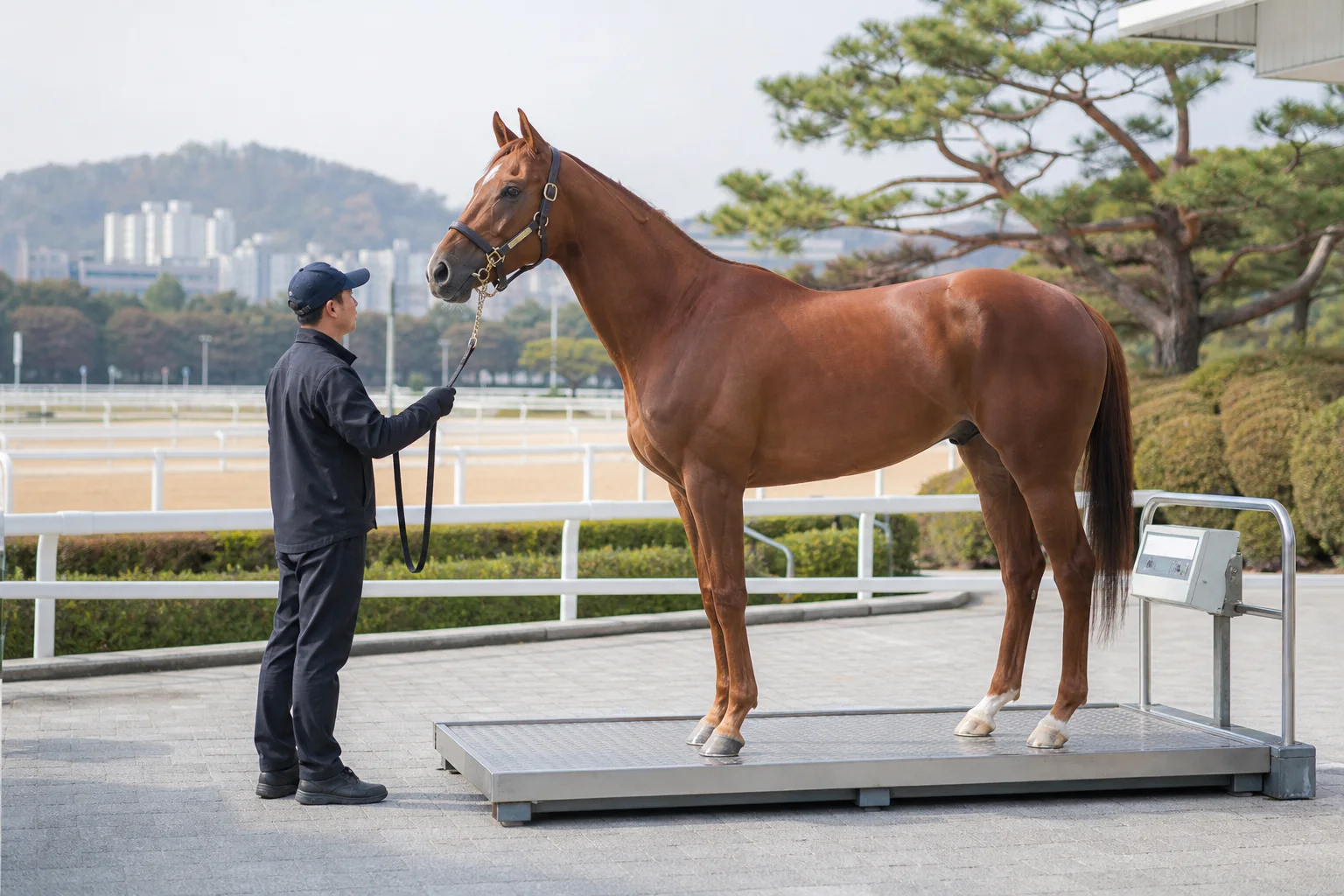
Racehorse body weight is best used to track changes in the same horse, not to rank runners by size. On a Korean race card, 500 (+6) means that the horse weighs 500 kg and is 6 kg heavier than the comparison start. The change alone is neither good nor bad.
Body weight is not carried weight
Body weight is the weight of the horse. Carried weight is the race load that includes the jockey and relevant equipment. A 480 kg horse carrying 55 kg therefore displays two different measurements. See our Korean race-card guide for the role of each field.
Compare the horse with itself
Horses differ in frame, muscle and normal weight range. A 500 kg runner is not automatically fitter or faster than a 450 kg runner. List the same horse’s recent weights in date order and identify its usual range. KRA’s recent-form pages record body weight for each start, making this comparison possible.
When weight increases
An increase can reflect growth, a return from a break, a longer interval between starts or a change in conditioning. Young horses may gain weight as they mature. Ask three questions:
- How long has it been since the previous start?
- How did the horse move at similar weights before?
- Is this a one-off change or part of a continuing trend?
When weight decreases
A decrease can also have several explanations and should not automatically be labelled fatigue or poor condition. If the drop is unusual for that horse, check the interval between races, its recent weight range, race-day appearance and official veterinary or entry updates.
How many kilograms count as a large change?
There is no single threshold that fits every racehorse. The meaning of 10 kg depends on the horse’s size and normal variation. A percentage can provide context, but a rigid cut-off ignores individual differences.
A simple log is more useful:
| Start | Body weight | Change | Distance | Observation |
|---|---|---|---|---|
| Latest | 486 kg | +4 kg | 1400 m | Note start and finish |
| Previous | 482 kg | -2 kg | 1400 m | Mark comparable conditions |
| Third | 484 kg | 0 kg | 1200 m | Note distance change |
These figures are examples, not a recommended weight range.
What to check alongside body weight
- Time since the previous race
- Distance and class changes
- Any change in carried weight
- Starting behaviour and late-race movement
- Race-day withdrawals, veterinary notes and declarations
Body weight is the beginning of an assessment, not a result signal. Its value comes from comparing the same horse over time and adding race conditions, recent performance and current official information.
Informational content based on public data. It does not guarantee race outcomes or profit.